Introduction
Choosing an overband magnetic separator is not only a question of magnetic force. In real conveyor belt systems, the right choice depends on the material being conveyed, the thickness of the material layer, the belt width, the belt speed, the installation height, the type of ferrous contamination, and whether the production line can stop for manual cleaning.
For mining, recycling, aggregate, cement, coal handling, wood processing, and bulk material handling plants, the purpose is usually simple: remove tramp iron before it damages crushers, screens, shredders, mills, or downstream conveyors. The selection process, however, needs to be practical and technical. A separator that works well on a light material stream may not perform well when the material layer is thick. A manual-clean suspended magnet may be economical for occasional tramp iron, but it may create downtime in a recycling line with frequent ferrous contamination.
This guide explains how procurement teams, plant engineers, and equipment distributors can evaluate an overband magnetic separator before requesting a quotation. It also outlines the information a supplier should ask for during selection.
What Is an Overband Magnetic Separator?
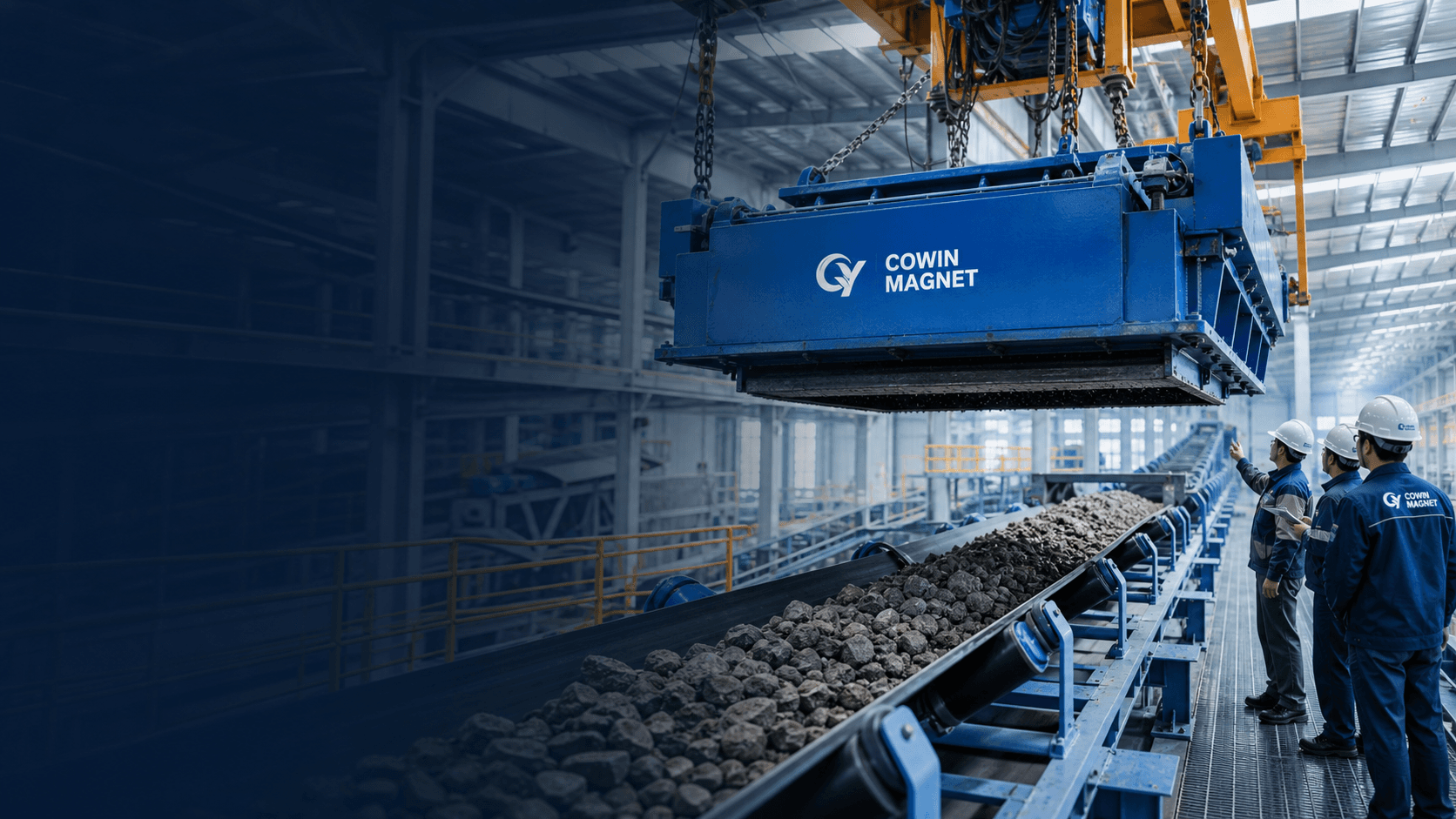
An overband magnetic separator is installed above a conveyor belt to attract and remove ferrous metal from conveyed materials. It is commonly used to remove tramp iron from ores, aggregates, coal, waste, wood chips, cement raw material, and other bulk materials.
The separator may use a permanent magnetic system or an electromagnetic system. It may also be manual-clean or self-cleaning. A self-cleaning design uses a moving discharge belt to carry captured iron away from the magnetic zone, which allows continuous operation.
In practical applications, overband separators are often used to:
- Protect crushers, shredders, grinders, mills, and screens.
- Improve material purity before the next processing stage.
- Reduce downtime caused by metal damage.
- Lower maintenance cost in conveyor-based production lines.
- Support continuous operation in mining, recycling, cement, and aggregate plants.
Step 1: Confirm the Material and Application
The first question is not “How strong is the magnet?” The first question is “What material is being processed?”
Different materials behave differently under the same magnetic field. Dry aggregate, iron ore, coal, mixed construction waste, wood chips, and shredded recycling materials have different densities, flow behavior, particle sizes, and material layer thicknesses.
For example, an aggregate plant may need to remove occasional tramp iron from stone before a crusher. A recycling plant may need continuous removal of mixed ferrous scrap from a fast-moving conveyor. A cement plant may need stable performance in a dusty environment with long operating hours. These situations may require different separator structures, cleaning methods, and magnetic depths.
When preparing a quotation request, include:
- Material type.
- Particle size.
- Bulk density if available.
- Moisture level.
- Whether the material is free-flowing, sticky, dusty, or abrasive.
- Main purpose: equipment protection, material purification, or metal recovery.
This information helps the supplier avoid recommending a generic model.
Step 2: Measure Conveyor Belt Width
Belt width is one of the most important sizing factors. The magnetic field must cover the effective material stream. If the separator is too narrow, ferrous material near the edges may not be captured efficiently. If it is oversized, the buyer may pay more than necessary.
Common conveyor widths may include 500 mm, 650 mm, 800 mm, 1000 mm, 1200 mm, 1400 mm, or larger. COWIN MAGNET’s catalog-based product range includes suspended and overband solutions for common industrial conveyor widths, with custom design available for specific layouts.
For selection, provide:
- Conveyor belt width.
- Actual material width on the belt.
- Whether the conveyor has side guards.
- Whether the material is centered or unevenly distributed.
If the conveyor drawing is available, it is useful to send it with the inquiry.
Step 3: Check Material Layer Thickness
Material layer thickness affects magnetic penetration. A strong surface magnetic field does not always mean good performance if iron pieces are buried deep under material.
For shallow material layers, a permanent overband magnet may be sufficient. For thicker burden, larger iron pieces, or deeper metal contamination, a suspended electromagnetic separator may be better because it can provide deeper magnetic penetration and stronger attraction under certain working conditions.
Suppliers usually need:
- Average material layer height.
- Maximum material layer height.
- Position of ferrous contamination: mostly on the surface or buried inside.
- Size and weight range of tramp iron.
During factory selection or pre-delivery testing, engineers may simulate material height and check attraction performance. This type of practical testing is more useful than only comparing catalog claims.
Step 4: Consider Belt Speed
Belt speed determines how long ferrous material stays under the magnetic field. If the belt runs quickly, the separator has less time to attract and lift the metal. Higher belt speed may require stronger magnetic force, a longer magnetic zone, optimized suspension height, or a different installation position.
Typical belt speed information should include:
- Normal operating speed.
- Maximum belt speed.
- Whether the speed is fixed or variable.
- Whether material flow is continuous or intermittent.
If the belt speed is high and the iron contamination is frequent, a self-cleaning overband separator is usually more practical than a manual-clean suspended magnet.
Step 5: Decide Manual-Clean or Self-Cleaning
Manual-clean suspended magnets are suitable when iron contamination is low. They are simple, economical, and can remove occasional tramp iron. However, operators must periodically remove captured iron from the magnet surface using safe non-magnetic tools.
Self-cleaning overband separators are better for continuous operation. The discharge belt removes captured iron automatically, reducing manual cleaning and production interruption.
Choose manual-clean when:
- Iron contamination is occasional.
- The production line can stop for cleaning.
- The budget is limited.
- Space and structure are simple.
Choose self-cleaning when:
- Ferrous contamination is frequent.
- The line needs continuous operation.
- Manual cleaning would create downtime.
- The application is recycling, shredding, mining, or demolition material processing.
Mid-Article CTA
Not sure whether your conveyor needs manual-clean or self-cleaning design? Send us your belt width, material type, belt speed, and installation height. COWIN MAGNET can help review the working conditions and recommend a practical separator configuration.
Button: Get a Quote
Step 6: Choose Permanent or Electromagnetic
Permanent overband magnets use permanent magnetic materials and do not require power for the magnetic field. They are energy-saving, stable, and suitable for many conveyor applications.
Electromagnetic separators use an energized coil to generate the magnetic field. They are often used when deeper penetration or stronger field control is needed, especially for thick material layers or heavy-duty industrial conditions.
Permanent magnets are commonly selected for:
- Lower operating cost.
- Stable performance.
- Medium-duty tramp iron removal.
- Continuous conveyor lines where power consumption should be minimized.
Electromagnets are commonly selected for:
- Thick material burdens.
- Deeply buried ferrous pieces.
- High-intensity industrial conditions.
- Applications where stronger attraction is required.
The best choice depends on the application, not a universal rule.
Step 7: Confirm Installation Method
Overband magnetic separators are usually installed in one of two ways: cross-belt installation or inline installation.
In cross-belt installation, the separator is mounted across the conveyor. Captured iron is carried to the side and discharged away from the material stream.
In inline installation, the separator is installed along the direction of material flow, often near the head pulley or discharge zone. This arrangement can sometimes improve separation because the material loosens at the discharge point.
Selection depends on:
- Conveyor layout.
- Available space.
- Discharge direction.
- Supporting frame structure.
- Maintenance access.
- Whether the line has existing equipment above or beside the conveyor.
Before manufacturing, installation drawings or site photos are useful. Shipment inspection should include checking mounting points, motor direction, belt tracking, and electrical configuration when applicable.
Step 8: Prepare Quote Information
A high-quality inquiry helps the supplier recommend quickly and accurately. Instead of sending only “Please quote magnetic separator,” prepare a short technical request.
Recommended inquiry information:
- Material name and particle size.
- Conveyor belt width.
- Belt speed.
- Material layer height.
- Suspension height available.
- Iron contamination type and approximate size.
- Required cleaning method: manual or automatic.
- Installation preference: cross-belt or inline.
- Voltage and working environment.
- Photos, drawings, or layout if available.
This information reduces back-and-forth communication and improves quotation accuracy.
Common Mistakes to Avoid
Choosing only by magnetic field value
Magnetic field data is useful, but it does not describe the full application. Magnetic depth, material burden, belt speed, and installation height matter.
Ignoring cleaning frequency
A manual-clean model can become inconvenient if the material contains frequent metal contamination.
Oversizing without checking layout
A larger separator may not fit the site or may require additional support structure.
Not checking discharge path
For self-cleaning separators, the discharged iron needs a safe and clear collection area.
Forgetting installation preparation
Before shipment, buyers should confirm lifting points, control cabinet placement, wiring, and maintenance access.
FAQ
What information is most important for selecting an overband magnetic separator?
Belt width, material layer height, belt speed, suspension height, and iron contamination level are the most important starting points.
Is a stronger magnet always better?
Not always. The separator should match the material, conveyor layout, and installation height. Oversizing may increase cost without solving the real problem.
When should I use a self-cleaning overband separator?
Use a self-cleaning model when ferrous contamination is frequent or when the production line should not stop for manual cleaning.
Can an overband magnet fit an existing conveyor?
Yes, but the supplier needs conveyor dimensions, mounting space, belt width, and installation photos or drawings.
Do permanent overband magnets need electricity?
The magnetic field does not require electricity. However, a self-cleaning model uses a motor to drive the discharge belt.
Conclusion
Choosing an overband magnetic separator requires more than selecting a model from a catalog. A practical selection should consider material properties, belt width, belt speed, material layer thickness, suspension height, cleaning method, installation layout, and downstream equipment risk.
For overseas buyers, the best approach is to share working conditions clearly before requesting a quote. This allows the supplier to recommend a separator that is technically suitable, easier to install, and more reliable in real production.
CTA
Need help selecting an overband magnetic separator for your conveyor line? Send your belt width, material, belt speed, suspension height, and iron contamination details to COWIN MAGNET.
Button: Send Your Requirements