Introduction
Many buyers search for magnetic separators by application rather than by product name. A mining engineer may search for a way to protect a crusher from tramp iron. A recycling plant may search for continuous metal separation on a conveyor. A cement plant may need to remove ferrous pieces before raw material enters a mill. An aggregate producer may want to reduce equipment damage in a stone crushing line.
These situations are different, but the selection logic is similar: identify the material, understand the risk, measure the conveyor, and choose a separator that matches the working condition.
This article explains magnetic separator solutions for mining, recycling, cement, aggregate, coal handling, and bulk material processing plants.
Why Tramp Iron Is a Serious Problem
Tramp iron can damage crushers, shredders, screens, mills, conveyors, and other downstream equipment. Even small metal pieces can create downtime if they enter sensitive equipment. Larger iron pieces can cause expensive damage and safety risks.
Magnetic separators are used to remove ferrous metals before they reach high-value equipment. In many plants, the separator is not only a purification device. It is also a protection device.
Common sources of tramp iron include:
- Broken machine parts.
- Bolts, nuts, and tools.
- Wire, nails, and scrap metal.
- Reinforcement steel in demolition waste.
- Metal fragments mixed with raw material.
- Ferrous contamination from upstream handling.
Mining Applications
Mining conveyors often carry heavy material with large particle size and thick material burden. The main purpose of magnetic separation is usually equipment protection before crushers, mills, and screens.
Recommended products may include:
- Suspended electromagnetic separator.
- Permanent overband magnet.
- Self-cleaning overband separator.
- Magnetic drum separator in specific process stages.
In mining, selection should focus on magnetic penetration, suspension height, belt speed, and material burden. If iron pieces are buried deeply, an electromagnetic separator may be required. If iron contamination is moderate and continuous power saving is important, a permanent overband magnet can be considered.
Before shipment, buyers should check structure, lifting points, control cabinet if applicable, and installation drawings. Site preparation should include safe support structure and a clear discharge area.
Recycling Applications
Recycling plants often have frequent and mixed ferrous contamination. Materials may include scrap waste, shredded materials, construction waste, municipal waste, or mixed industrial waste. In this environment, manual cleaning is often not practical.
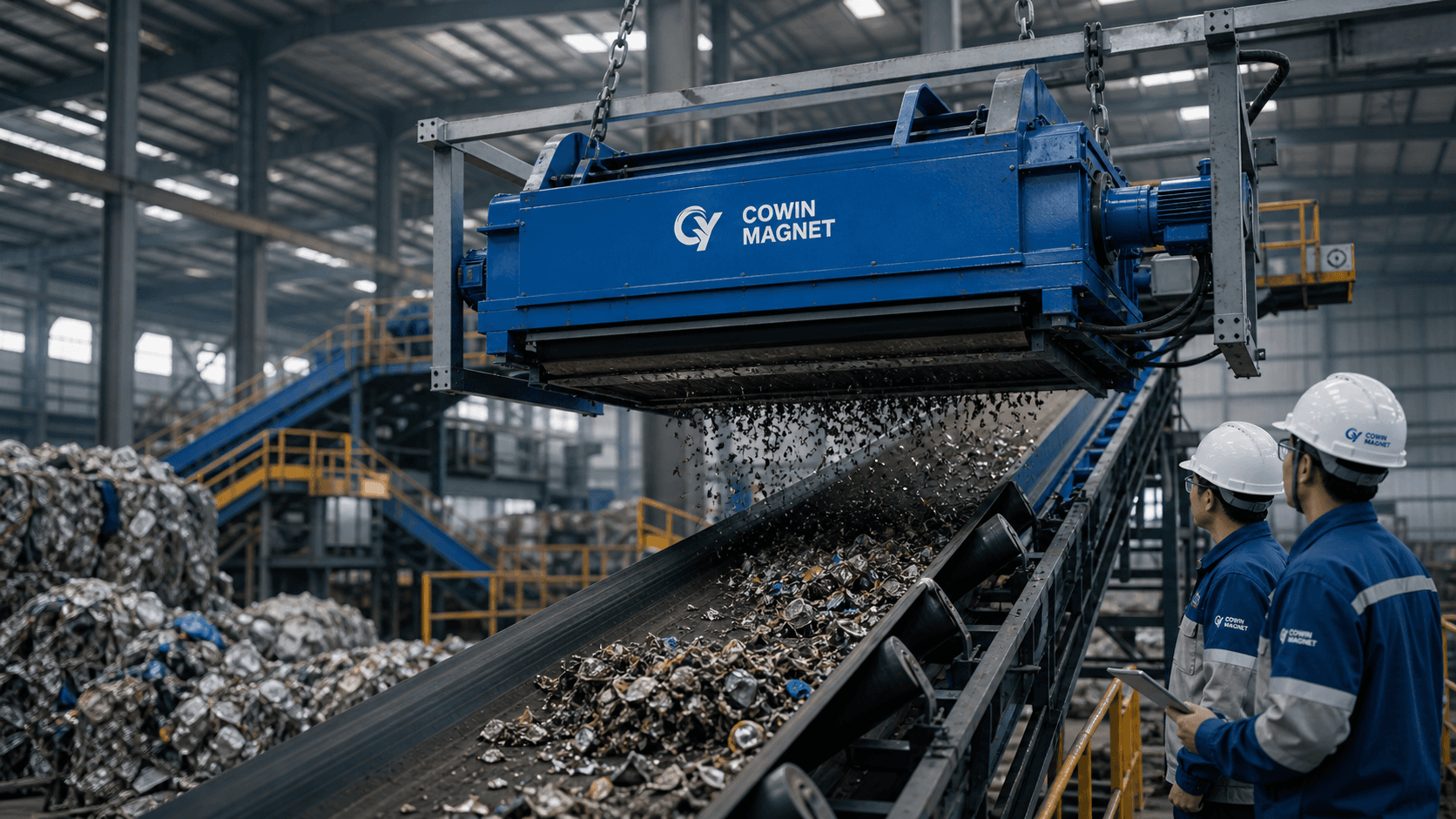
Self-cleaning overband magnetic separators are commonly used because they remove ferrous materials continuously. In some lines, magnetic drums, magnetic pulleys, and metal detectors may also be used.
Key selection factors include:
- High contamination frequency.
- Variable material size.
- Continuous operating requirement.
- Need for automatic discharge.
- Space around the conveyor for collected metal.
Factory testing should pay attention to belt tracking, motor operation, discharge direction, and stable running under load.
Cement Plant Applications
Cement plants need stable iron removal in dusty, continuous, and sometimes high-temperature environments. Magnetic separators are used to protect crushers, mills, and conveying equipment.
Recommended products may include:
- Suspended permanent magnetic separator.
- Suspended electromagnetic separator.
- Electromagnetic self-unloading iron remover.
- Metal detector for conveyor protection.
In cement applications, dust protection, stable operation, cooling method, and maintenance access are important. If the material layer is thick or the line runs continuously for long hours, electromagnetic equipment with suitable cooling may be considered.
Aggregate and Sand-Gravel Applications
Aggregate plants and sand-gravel processing lines use magnetic separators to remove tramp iron before crushing and screening equipment. The material is usually abrasive, and the conveyor layout may be simple but heavy-duty.
Permanent overband magnets and suspended permanent magnets are common options. If the material layer is light and iron contamination is occasional, a manual-clean suspended magnet may be enough. If the plant needs continuous operation, a self-cleaning model is more suitable.
Buyers should provide:
- Conveyor belt width.
- Stone size.
- Material layer height.
- Belt speed.
- Position before or after crusher.
- Estimated iron contamination.
Mid-Article CTA
Different industries need different separator configurations. Send your application, material, belt width, and site photos to COWIN MAGNET for practical selection support.
Button: Send Your Requirements
Coal Handling and Power Plant Applications
Coal handling lines often run for long hours and require stable equipment protection. Tramp iron can damage crushers, mills, and conveyors. Depending on the conveyor width and material burden, both permanent and electromagnetic separators may be used.
In power plant applications, reliability and safety are important. Buyers should confirm voltage, duty cycle, control requirements, and installation space before ordering.
Using Metal Detectors with Magnetic Separators
Magnetic separators remove ferrous metals, but some harmful metal contaminants may be non-ferrous. Industrial conveyor metal detectors can detect iron, stainless steel, copper, aluminum, and other conductive metals depending on the system.
A metal detector can be installed before crushers, shredders, grinders, or mills. It may trigger an alarm or connect to a conveyor stop system.
In some applications, a magnetic separator and metal detector work together:
- Magnetic separator removes ferrous metal continuously.
- Metal detector identifies remaining metal risks.
- Alarm or stop system protects downstream equipment.
How to Select by Application
If the goal is crusher protection
Focus on tramp iron size, material layer height, and installation position before the crusher.
If the goal is continuous metal recovery
Choose a self-cleaning overband separator or magnetic pulley depending on layout.
If the goal is fine ferrous removal
Consider magnetic drums, magnetic pulleys, grate magnets, or magnetic bars depending on material flow.
If the goal is detecting non-ferrous metals
Use an industrial metal detector with alarm or conveyor stop linkage.
Quote Information Checklist
To get a useful recommendation, prepare:
- Industry and application.
- Material and particle size.
- Belt width.
- Belt speed.
- Material layer height.
- Suspension height.
- Ferrous contamination type.
- Required cleaning method.
- Photos or drawings of conveyor layout.
- Voltage and working environment.
The more specific the information, the more practical the recommendation.
FAQ
What magnetic separator is best for mining?
For heavy material burden, suspended electromagnetic separators or strong overband magnets are commonly used. The final choice depends on belt width, material layer, and iron contamination.
What magnetic separator is best for recycling?
Self-cleaning overband magnetic separators are often suitable because recycling lines usually contain frequent ferrous contamination.
Can magnetic separators protect crushers?
Yes. They are often installed before crushers or shredders to remove tramp iron and reduce equipment damage.
Do cement plants need electromagnetic separators?
Some cement applications can use permanent separators, while thick material layers or heavy-duty lines may require electromagnetic separators.
When should I add a metal detector?
Add a metal detector when non-ferrous metals or remaining conductive metal risks need to be detected before downstream equipment.
Conclusion
Magnetic separator selection should start from the application. Mining, recycling, cement, aggregate, coal handling, and bulk material processing lines all have different contamination patterns and equipment risks. A reliable solution should match the material, conveyor, installation layout, and production goal.
For overseas buyers, sharing application details early helps the supplier recommend equipment that is easier to install, more reliable in operation, and better suited to the plant’s real conditions.
CTA
Tell us your application, material, conveyor belt width, and iron contamination problem. COWIN MAGNET will help review the conditions and recommend a suitable magnetic separation solution.
Button: Get a Quote